

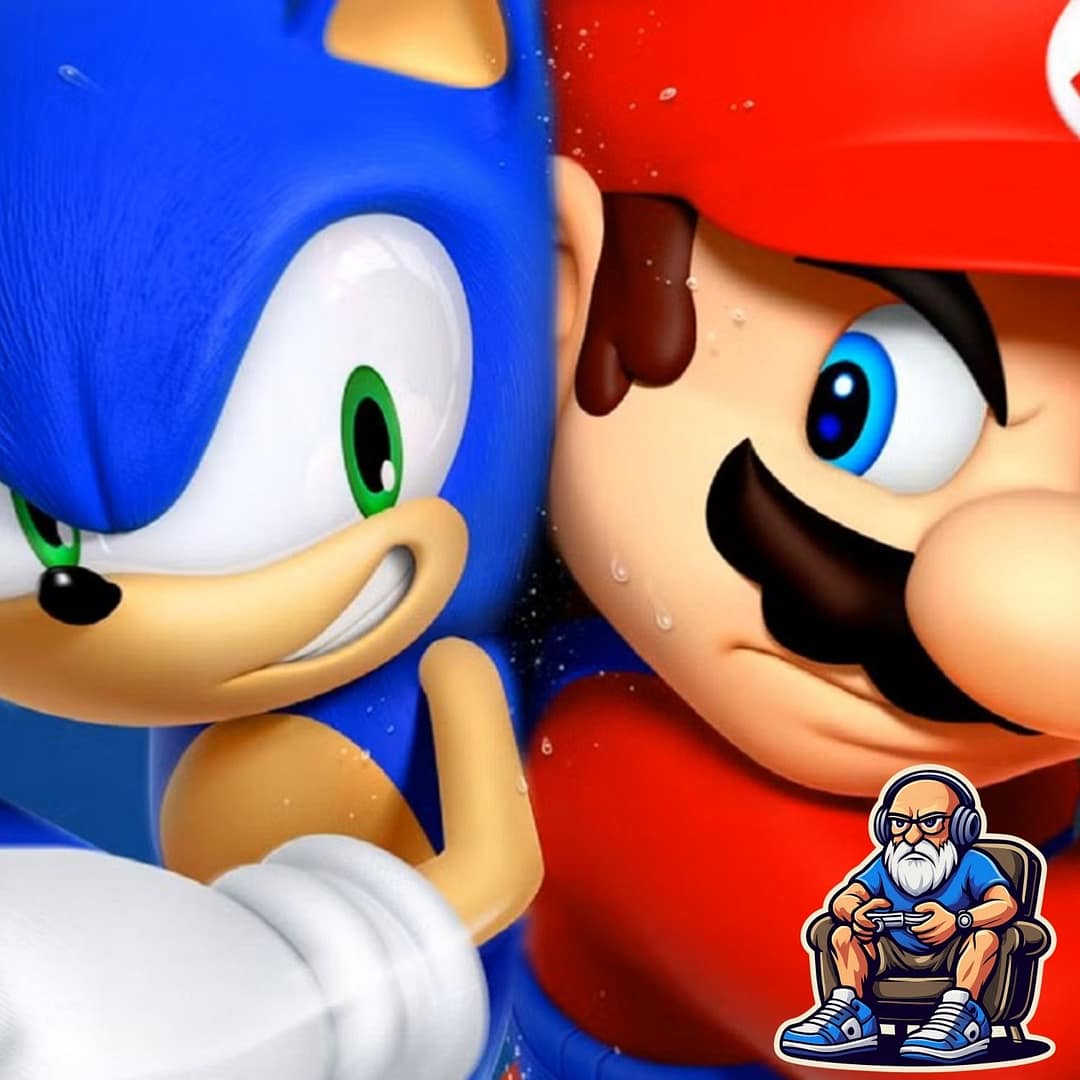
Ian, Al, and Tim examine the death of console exclusivity, from the Mario vs Sonic battleground of the 90s to today’s multiplatform reality where even Microsoft and Sony are sharing their crown jewels.
This episode explores how the gaming industry evolved from fierce console wars to today’s collaborative landscape where exclusivity no longer makes financial sense. The discussion covers the economic realities of selling consoles at a loss, Nintendo’s stubborn refusal to play nice, the handheld gaming revolution from Game Boy to Steam Deck, and why cross-platform gaming has become the ultimate selling point. Three grumpy gamers make bold predictions about GTA 6’s flawless launch (spoiler: they disagree) and debate whether consoles are truly dying or just evolving into something unrecognizable.
Grumpy Old Gamer Podcast – Episode 6 Show Notes
Episode Title: The End of Exclusivity: Why Every Game is Going Everywhere
Hosts: Ian, Al, Tim
Episode Length: ~61 minutes
Episode Summary
In the sixth episode of the Grumpy Old Gamer podcast, the hosts trace the complete history of console exclusivity from the Mario vs Sonic rivalry through to today’s multiplatform reality. Starting with arcade exclusivity and the original console wars, they examine why game companies sold consoles at a loss, how market forces killed exclusivity, and why Nintendo remains the stubborn exception. The conversation explores handheld gaming evolution, the Steam Deck revolution, cross-platform play’s rise, and culminates in heated predictions about GTA 6’s launch and the rumored Steam console’s potential to challenge PlayStation and Xbox.
Key Topics Discussed
The Origins of Console Exclusivity (1980s-1990s)
The First Console War:
- Choice between Mario (Nintendo) or Sonic the Hedgehog (Sega)
- “The first exclusivity issue” in console gaming history
- Exclusivity drove console sales in an era where hardware was profitable
Arcade Exclusivity:
- Namco titles were exclusive to specific arcade manufacturers
- Unknown brands commanded premium placement
- Arcade-exclusive games later became available everywhere
Why Exclusivity Worked Then:
- Companies made money by selling consoles
- Hardware sales were the primary revenue stream
- Exclusive games justified console purchases
- Each platform had distinct libraries that didn’t overlap
The Economic Shift: Consoles Sold at a Loss
Modern Console Economics:
- PlayStation 5 costs more to manufacture than retail price
- Xbox Series X sold below production cost
- Console makers now lose money on hardware sales
- Real revenue comes from game sales, not hardware
The Business Case Against Exclusivity:
- “If you limit who can buy your games when you know that selling your games is how you make your money, why are you making them exclusive? It doesn’t make financial sense.”
- Hollywood-level budgets require maximum market reach
- Game development costs have skyrocketed
- Limiting platform availability reduces potential revenue
Market Evolution:
- Gaming industry now larger than movie industry financially
- Multi-billion dollar investments per AAA title
- Need to recoup costs across all available platforms
- Exclusivity became a financial liability rather than asset
Nintendo: The Stubborn Exception
Nintendo’s Unique Position:
- “Nintendo will never ever ever play nice and play with the others”
- Mario, Pokémon, Zelda remain strictly Nintendo-exclusive
- No Nintendo games officially available on PC
- 20+ year history of maintaining exclusivity
Why Nintendo Is Different:
- Not competing directly with PlayStation/Xbox
- Focus on handheld/hybrid market with Switch
- “Cornering that market” rather than challenging big boys
- Different demographic and gaming philosophy
Nintendo’s Innovation Strategy:
- Post-Gamecube departure from traditional consoles
- Wii introduced motion controls as market differentiator
- “Nintendo are good at doing innovations. They’re not very good at perfecting them.”
- Switch combined handheld and home console experiences
Nintendo’s Gaming Philosophy:
- Niche, family-friendly market focus
- “Gaming system for children essentially”
- Avoided head-to-head competition with Sony/Microsoft
- Successful by not trying to be mainstream
Historical Nintendo Hardware:
- NES, Super Nintendo, Gamecube (traditional consoles)
- Wii (motion control innovation)
- Wii U (commercial failure)
- Switch (hybrid success)
- Switch 2 (upcoming)
The Handheld Gaming Revolution
Early Handheld History:
- Game Boy era defined portable gaming
- Game Boy Color expanded capabilities
- Game Boy Advance pushed technical limits
- Sega Game Gear (1990) competed but failed
- Limited by miniaturization technology of the era
PlayStation Portable (PSP) Analysis:
- “Ahead of its time” technologically
- “I thought the PSP was absolutely magnificent”
- Mini-computer capabilities (gaming, films, media)
- Failed due to expectations vs. technical limitations
- Smartphone rise killed dedicated portable media devices
- Graphics couldn’t match home consoles of the era
Why Early Handhelds Failed:
- “You couldn’t have quite a decent PC in your hand”
- Technology wasn’t advanced enough
- Screen size limitations
- Battery life constraints
- Performance gap between portable and home gaming too large
Modern Handheld Success Factors:
- Miniaturization technology finally caught up
- “Everything’s getting smaller and smaller”
- Can now put “the power of a PC into a handheld device”
- Screen quality rivals desktop monitors
- Performance parity with mid-range PCs
Steam Deck: The Game Changer
Technical Achievement:
- “Decent computer in your hands”
- 720p base model, 1080p premium version
- Full Steam library compatibility
- PC-level gaming experiences portable
- “What isn’t to like about that?”
Market Impact:
- “Massive success” in handheld space
- Proved PC gaming library could go portable
- Challenged Nintendo’s handheld monopoly
- Inspired competitors (ROG Ally)
Gaming Experience:
- Same as PC gaming, just smaller screen
- “You hold it closer to your face”
- Perspective makes screen size irrelevant
- Full mouse and keyboard game support via peripherals
Convenience Factor:
- Ideal for travel, festivals, camping
- “You’ve got a decent computer in your hands with Steam library”
- No need to drag hardware to LAN parties
- Smartphone-killed-PSP argument reversed
Console vs. PC Gaming Divide
PC Gaming Advantages:
- Upgradeable hardware
- “Free to put whatever you want in there”
- No waiting for next generation
- Mouse and keyboard precision
- Higher performance ceiling
Console Gaming Advantages:
- Social gaming experiences
- Couch co-op focus
- “You don’t have a PC taking pride of place next to your 60-inch TV”
- Turn-based gaming with friends
- Lower barrier to entry
- Family-friendly in living room spaces
The PC Master Race Problem:
- “This entire notion of the PC master race, it kind of pisses me off”
- “We’re all gamers and we’re all part of the same fraternity”
- Elitism damages gaming community
- Different platforms serve different needs
- No platform objectively superior
Screen Size and Social Gaming:
- PC gaming typically solitary in bedroom/office
- Console gaming naturally social in living spaces
- “Come to my bedroom and let’s play on my PC” vs. console in living room
- Big screen experiences better for group gaming
- Perspective matters: “If you put your face close to your 32-inch TV, it’s like a 60-inch TV”
Cross-Platform Gaming: The New Standard
What Cross-Platform Means:
- PC, Xbox, PlayStation players in same servers
- “Multiplatforming of exclusivity is really a big thing now”
- Friends can play together regardless of platform
- Breaking down console war barriers
Games Leading the Way:
- Space Marine 2: PC, Xbox, PlayStation crossplay
- Ark Survival Ascended: “All play together in the same server”
- Rust (mentioned as crossplay example)
- Fortnite: Xbox and PC same-server gaming
Why It’s the Future:
- “It’s a selling point now”
- “Doesn’t matter what you’re playing on, I want to play with my mates”
- Marketing advantage for new releases
- Consumer demand driving change
Consumer Awareness:
- “Gamers are very savvy”
- “They don’t buy the bullshit”
- If one game supports crossplay, why not all?
- Pressure on developers to enable crossplay
Historical Barriers:
- Xbox 360 and PS2 era: complete separation
- “Never in a month of Sundays” would crossplay happen
- Technology existed but corporate competition prevented it
- Network infrastructure challenges (before Xbox Live standardization)
Are Consoles Dying?
The “Consoles Are Dying” Myth:
- “People have been saying that consoles have been dying for decades”
- “A bit of a stretch to say they’re dying”
- Consoles evolving, not dying
- Entry point to gaming now smartphones/tablets, not consoles
Evidence Consoles Live:
- GTA 6 will drive “serious uptick in consoles”
- PlayStation 6 confirmed in development
- Nintendo always producing new hardware
- Continued consumer demand for console experiences
Xbox’s Unique Position:
- Shifting focus from hardware to services
- “No longer hyping their console”
- Emphasis on Game Pass, cloud gaming, live services
- “Kind of looks like they’ve given up on the Xbox”
Confirmed: New Xbox Coming:
- Windows Central confirmation of new Xbox
- “Premium successor to the Xbox Series X”
- Approved by Microsoft CEO Satya Nadella
- 2027 target release date
- No Series S successor planned
Xbox Handheld Confirmed:
- First-party Xbox gaming handheld coming
- Challenges Nintendo Switch 2 and Steam Deck
- Replaces Series S in lineup
- Part of multiplatform strategy
Console Evolution vs. Death:
- Definition of “console” changing
- From “60 lb monstrosity” to portable hybrid devices
- Switch proved hybrid model viable
- Future consoles may be unrecognizable from current form
Convenience Driving Change:
- “Easier to have a tablet that has Game Pass”
- Stream to TV rather than physical hardware
- No need to drag hardware between locations
- Smartphone-style accessibility
The GTA 6 Debate
Launch Exclusivity:
- Releasing on PlayStation and Xbox first
- PC version delayed (6 months to 1 year typical)
- No justifiable technical reason for delay
- “There is absolutely no bloody reason why GTA 6 can’t come out on the PC at the same time”
The Anticipation:
- “The biggest game release in history”
- “Most anticipated game release in history”
- Trailer got 475 million views first day
- Broke YouTube records
- “1/11th of the world’s population watched the GTA 6 trailer”
Launch Quality Predictions:
Al’s Position: “Flawless launch”
- Biggest budget in gaming history
- Predominantly single-player (no server overload concerns)
- Rockstar’s positive track record
- “They can’t afford to release something half-baked”
- Billions of dollars invested
- “Most expensive game in history”
Ian’s Counterargument: Same bugs as any launch
- “Unavoidable” first-day issues
- Every game has launch problems
- Impossible to have flawless launch
- People will complain regardless
Tim’s Position: Middle ground
- Weight of expectation too high
- “People will always find something wrong”
- Complaints inevitable
The Double-Dipping Theory Debunked:
- “I don’t buy that they’re getting paid twice”
- Most gamers won’t buy same game on console AND PC
- GTA 5 experience same across platforms
- No incentive to purchase twice
- Enhanced editions don’t justify double purchases
PC vs. Console Bug Philosophy:
- “PC gamers are far more forgiving when it comes to bugs”
- Console gamers expect premium out-of-box experience
- PC gamers used to early access, demos, patches
- Console gaming culture demands polish
Success Predictions:
- Will be successful and acclaimed (all agree)
- Greatest of all time? Debatable
- Half-Life 2 still holds that crown (according to hosts)
- GTA 7 won’t arrive for decades
The Rumored Steam Console
What We Know:
- Code name: “Valve Fremont”
- Running Steam OS
- Rumored on gaming websites
- Full console competitor to PlayStation/Xbox
Market Positioning:
- Access to Steam library on TVs
- “Steam console is going to give people access to their Steam libraries on their TVs, in their gaming spaces, in their social gaming spaces”
- 1 billion Steam accounts (2019 numbers)
- Converting PC gamers to console gaming
Pricing Strategy:
- Must compete with PlayStation/Xbox pricing
- Won’t be $1,500 like high-end PC
- Likely sold at loss like other consoles
- Mid-tier AMD hardware expected
- “Accessible price-wise”
Will It Challenge PlayStation/Xbox?
Al’s Position: Yes
- Everyone has Steam account
- Massive existing user base
- Natural extension of Steam ecosystem
- “Everyone has a Steam account”
Tim’s Position: Consumers win regardless
- More convenience, mobility, better graphics
- Competition benefits gamers
- “We as the consumers are benefiting and gaining from it”
Ian’s Position: Uncertain
- Valve focuses on store, not hardware
- Steam is “Amazon for digital downloads”
- Console as storefront expansion
- Success depends on price point
Valve’s Business Model:
- Steam is primarily a storefront
- “Valve is a shopfront. Really, it’s a store.”
- Console to get storefront in front of more people
- Hardware sold at loss, profit from game sales
- Same economic model as PlayStation/Xbox
Challenges to Nintendo:
- Steam Deck already challenging Switch
- Microsoft handheld also coming
- Can Nintendo maintain handheld dominance?
- “Too much money” from competitors
- “Outperform them with marketing, content, game libraries, and quality”
Notable Quotes
On Console Exclusivity’s Death:
- “If you limit who can buy your games when you know that selling your games is how you make your money, why are you making them exclusive? It doesn’t make financial sense.”
- “Exclusivity is over. I think that’s clear.”
- “Everyone’s sharing the same thing. There may be like a time barrier, but one way or another, you’ll just get it.”
On Nintendo:
- “Nintendo will never ever ever play nice and play with the others”
- “Nintendo’s got always going to Nintendo”
- “Nintendo are good at doing innovations. They’re not very good at perfecting them”
- “Gaming system for children essentially”
On Console Economics:
- “Consoles are sold at a loss very typically”
- “Game companies do not make their money through hardware. They make their money through software”
- “They realized that cross-platform or multiplatform is the way forward”
On PC Master Race:
- “This entire notion of the PC master race, it kind of pisses me off”
- “We’re all gamers and we’re all part of the same fraternity”
- “PC gamers are far more forgiving when it comes to bugs than what console gamers are”
On Handheld Gaming:
- “I thought the PSP was absolutely magnificent”
- “What isn’t to like about that?” – on Steam Deck
- “Everything’s getting smaller and smaller and smaller”
On GTA 6:
- “The biggest game release in history is GTA 6”
- “475 million views on its first day”
- “This is going to be a flawless launch” – Al’s bold prediction
- “There is absolutely no bloody reason why GTA 6 can’t come out on the PC at the same time”
- “1/11th of the world’s population watched the GTA 6 trailer”
On Cross-Platform Gaming:
- “Multiplatforming of exclusivity is really a big thing now. And it’s a selling point.”
- “Doesn’t matter what you’re playing on, I want to play with my mates”
- “Gamers are very savvy. They’re very aware of the market”
On Console Gaming Future:
- “Consoles are dying is purely a notion which people have been saying since time immemorial”
- “It’s evolving rather than dying”
- “Always going to be a desire for people to have consoles and to sit on their sofa with a joypad and have a big TV console experience”
On Steam Console:
- “Everyone has a Steam account”
- “Steam is Amazon basically for digital downloads”
- “Gaming is shit now” – (referenced but not elaborated in this episode)
Memorable Moments
The Nintendo Stubbornness Debate:
- Extended discussion about whether Nintendo will ever release games on other platforms
- Al’s firm stance that they never will
- Historical comparison to Xbox/Sony changes nobody predicted
The PSP Appreciation Society:
- Tim’s passionate defense of PSP as “absolutely magnificent”
- Discussion of using PSP at festivals and camping
- How smartphones killed the PSP dream
The GTA 6 Predictions:
- Al’s bold “flawless launch” prediction officially on the record
- Ian and Tim marking time and date for accountability
- Half a billion trailer views statistic
- The “1/11th of world population” calculation
The Skyrim 2 vs. GTA 6 Anticipation Argument:
- Ian suggesting Skyrim 2 more anticipated
- Al’s immediate rebuttal: “It’s Bethesda. It’s going to be shit”
- “You need mods” – dismissal of Bethesda’s quality
The PC Master Race Rant:
- Al’s passionate defense of console gamers
- “We’re all part of the same fraternity”
- Challenge to the elitism in PC gaming community
The Steam Account Census:
- “1 billion Steam accounts” revelation
- Joke about “one was in North Korea or was it two?”
- Recognition of Steam’s massive market dominance
Al’s Anti-Nintendo Stance:
- “I would never in a month of Sundays be seen with a Switch in my hand”
- “Kitty games” dismissal of Nintendo library
- “Latest pile of shit is that’s coming out of Japan”
- Firm stance on being “a grown man”
The Wii vs. PlayStation Move:
- Tim’s preference for PlayStation Move over Wii
- Discussion of Nintendo’s innovation vs. perfection
The Tangent Management:
- Multiple times the hosts caught themselves going off-topic
- “What the hell are we talking about?”
- Constant returns to core exclusivity theme
The Convenience Factor:
- “Dragging a TV with console to someone else’s house”
- Comparison to LAN party logistics
- Modern streaming vs. physical hardware transport
Technical Details and References
Confirmed Hardware Releases:
- Xbox Series X successor (2027 target)
- Xbox handheld gaming device (2027)
- PlayStation 6 (in development)
- Nintendo Switch 2 (upcoming)
- Steam console “Valve Fremont” (rumored)
Historical Hardware Timeline:
- Game Boy era (1989-2003)
- Game Boy Color
- Game Boy Advance
- Sega Game Gear (1990)
- PlayStation Portable (PSP)
- Nintendo Gamecube
- Nintendo Wii (motion controls)
- Nintendo Wii U (failure)
- Nintendo Switch (current success)
- Xbox 360 and PlayStation 2 era exclusivity
- Xbox Series S and Series X (current gen)
- PlayStation 5 (current gen)
Technology Advances:
- Miniaturization enabling handheld PC performance
- AMD technology powering modern consoles
- Cloud gaming infrastructure
- Steam OS for consoles
- Cross-platform server architecture
Market Statistics:
- 1 billion Steam accounts (2019)
- GTA 6 trailer: 475 million views first day
- Gaming industry larger than film industry
- Consoles sold at loss, profits from software
Cross-Platform Games Mentioned:
- Space Marine 2
- Ark Survival Ascended
- Rust
- Fortnite
- God of War (formerly PlayStation exclusive)
- Resident Evil 4 (best version on Gamecube)
Controllers and Input:
- PlayStation Portal (remote play device)
- PlayStation Move
- Wii motion controls
- Traditional joypad design
- Mouse and keyboard for PC
Future Episode Teases
Explicitly Mentioned:
- “Steam Deck and other handhelds” deep dive
- VR gaming comprehensive discussion
- More industry impact analysis
Topics Referenced for Later:
- Handheld gaming detailed comparison
- Cloud gaming technology and future
- Game Pass and subscription services
- Console hardware technical specifications
- Nintendo’s future in gaming market
Contact & Community
Listen: Spotify | Apple | Amazon | YouTube
Follow / Community: Discord | Twitch | Steam | Curator | Facebook | Twitter | Bluesky | Instagram | Threads
Contact: Website | grumpyoldgamer[at]gog.fm
Episode Verdict
The hosts conclude that console exclusivity is effectively dead outside of Nintendo’s stubborn corner of the market. While the technology enabling cross-platform play has existed for years, economic realities finally forced Microsoft and Sony to embrace multiplatform releases. Games are simply too expensive to develop and consoles too expensive to subsidize for exclusivity to remain viable.
The discussion reveals an industry in transition: consoles aren’t dying but evolving into hybrid devices, subscription services, and cloud platforms. The Steam Deck proved that portable PC gaming works at scale, Microsoft is pivoting from hardware to services, and even traditionally exclusive Sony titles now appear on competing platforms. Only Nintendo stands apart, successfully carving a family-friendly niche that doesn’t directly compete with the “big boys.”
Most controversially, Al stakes his reputation on GTA 6 launching flawlessly despite Ian and Tim’s skepticism, setting up what could be the podcast’s most memorable “told you so” moment when Rockstar’s magnum opus finally arrives.
Key Takeaway: Exclusivity died the moment consoles became loss leaders and software became king. Cross-platform play is now a selling point rather than a technical achievement, and the future belongs to whoever can deliver gaming experiences anywhere, anytime, on any device. Nintendo’s the exception that proves the rule—but even their grip on handhelds faces unprecedented challenges from Steam Deck, Xbox’s rumored handheld, and the coming Steam console.
The GTA 6 Prediction: Mark your calendars. Al predicts a flawless launch. Ian predicts typical day-one chaos. Someone’s eating crow when that trailer turns into an actual game.
Discover more from Grumpy Old Gamer Podcast
Subscribe to get the latest posts sent to your email.